

Locked Out? What To Do If You Cannot Get Into Your House


Being locked out of your house is stressful, but the best first step is usually to avoid forcing the door.
Check whether another legitimate entrance is available, whether someone you trust has a spare key, and whether the problem appears to be with the key, the lock or the door itself. If the door still will not open normally, professional locksmith help may be the safest way to regain access without causing unnecessary damage.
What Should You Do First If You Are Locked Out?
Start with the simplest checks before assuming the lock has failed.
Check whether another authorised door is accessible.
Contact someone who may hold a spare key.
Inspect your key for visible bending or damage.
Check whether the handle or lock feels unusually stiff.
Avoid repeatedly twisting the key if it will not move.
Do not force the door, frame or locking mechanism.
If the key normally works but suddenly does not, the problem may be mechanical rather than simply a case of being locked out.
That distinction matters because a faulty cylinder, jammed mechanism or misaligned door may need repairing once access has been restored.
Do Not Force A Stiff Lock Or Door
When you cannot get inside, it is tempting to push harder, lift the handle repeatedly or force the key.
This can turn a relatively straightforward fault into a more expensive repair.
A stiff key may snap inside the cylinder. A jammed handle can place extra pressure on internal components. With uPVC doors, forcing the mechanism can also damage the multi-point locking system.
If the lock is resisting normal use, stop applying extra force.
Professional entry methods are designed to deal with the cause of the problem while reducing unnecessary damage wherever possible.
Why Might Your Door Suddenly Stop Opening?
A house lockout is not always caused by missing keys. Several faults can prevent a door from opening even when you have the correct key.
You Have Lost Your Keys
This is one of the simplest lockout situations because the lock itself may still be operating normally.
If another keyholder cannot help, a locksmith can assess the lock and determine the most suitable way to regain entry.
If the keys have been lost somewhere public or you are concerned somebody could associate them with your property, changing the lock afterwards may also be sensible.
The Key Will Not Turn
A key that goes into the lock but refuses to turn can indicate several problems.
The cylinder may be worn, the key could be damaged or the door may be placing pressure on the locking mechanism.
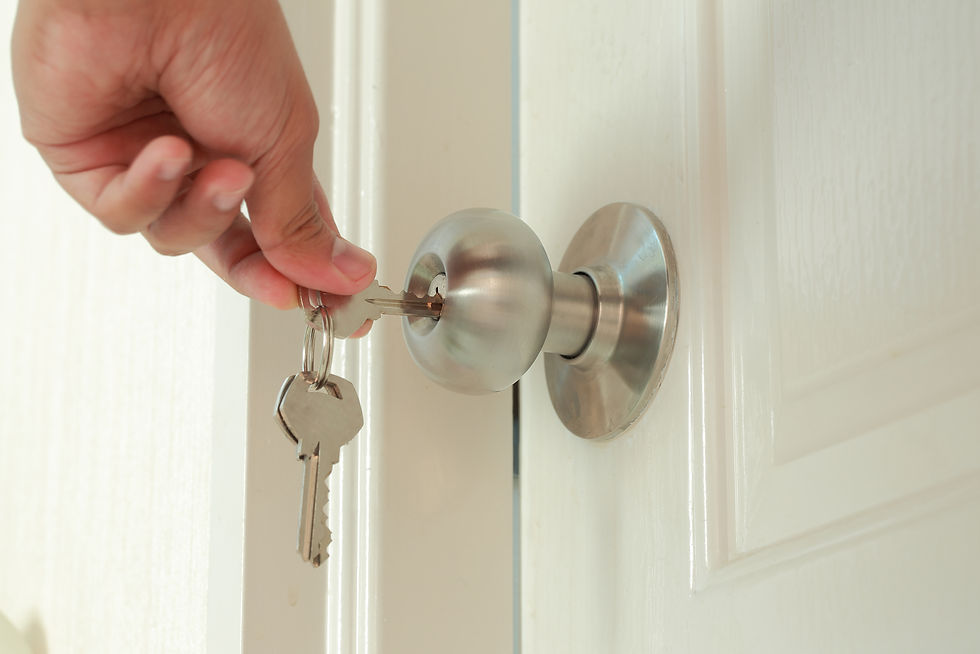
Avoid repeatedly forcing the key. If it snaps inside the lock, the broken section may need extracting before the cylinder can be assessed.
If this has already happened, professional lock repair may help determine whether the existing lock can be restored or needs replacing.
The Door Is Out Of Alignment
Sometimes the lock is working, but the door is no longer sitting correctly in its frame.
This is particularly common with uPVC doors.
You may have noticed warning signs beforehand, such as:
Needing to lift the handle harder than usual
Pushing or pulling the door before the key turns
The door catching on the frame
The locking points feeling increasingly stiff
If the door has moved slightly, the locking mechanism may no longer line up properly with the frame.
H3: The Locking Mechanism Has Failed
Locks and door mechanisms contain moving parts that wear over time.
A complete failure is sometimes preceded by small changes such as stiffness, grinding, clicking or inconsistent operation.
If the internal mechanism fails while the door is locked, the correct key may no longer be enough to open it.
This is one reason why early warning signs should not be ignored.
H2: Can A Locksmith Get You Back Inside Without Damage?
In many circumstances, yes.
Professional locksmiths use non-destructive entry methods wherever the type and condition of the lock allow.
The best method depends on the reason the door will not open. A straightforward lost-key lockout is different from a failed cylinder or damaged uPVC mechanism.
At MW Locksmiths, our lock-in & lockout service focuses on regaining access without unnecessary damage wherever practical.
However, non-destructive entry is not possible in every situation. If the lock or mechanism has failed internally, damaged parts may need to be repaired or replaced once the door has been opened.
H2: Do You Need A New Lock After Being Locked Out?
Not always.
Being locked out does not automatically mean that the existing lock needs replacing.
If your keys were simply left inside and the lock remains in good condition, there may be no need to change it.
A lock change may be worth considering if:
Your keys have been lost or stolen.
You cannot be certain who has access to copies.
The cylinder has failed.
The lock is badly worn or damaged.
The existing lock no longer provides the security you want.
The property has recently changed occupants.
The important point is to identify why the lockout happened first.
Replacing a lock unnecessarily will not solve a separate issue such as poor door alignment or a failing multi-point mechanism.

Why uPVC Doors Can Cause Lockouts
uPVC doors operate differently from many traditional timber doors.
They commonly use multi-point locking mechanisms that secure the door at several points along the frame. These systems depend on several components working together correctly.
If the door drops slightly, the hinges become worn or the internal mechanism starts to deteriorate, the lock can become harder to operate.
Early signs may include:
A handle that feels unusually heavy
A key that only turns when pressure is applied to the door
Difficulty lifting the handle fully
A door that needs pushing into the frame
Grinding or clicking from the mechanism
If these symptoms are ignored, the door can eventually become stuck in the locked position.
Our uPVC door & window repair service covers faults involving alignment, handles, locking mechanisms and related components.
How To Reduce The Risk Of Being Locked Out Again
Not every lockout can be prevented, but some are caused by faults that develop gradually.
Pay attention when a lock or door starts behaving differently.
A key that occasionally sticks, a handle that feels heavier or a door that needs extra pressure to close should not be treated as normal.
Getting these problems checked before the mechanism fails can sometimes mean the difference between a routine adjustment and an emergency lockout.
It can also help to:
Keep a spare key with someone you trust.
Replace damaged or badly worn keys.
Deal with stiff locks early.
Have misaligned doors adjusted.
Avoid forcing handles or keys when they resist.
Review older locks if their condition is uncertain.
Small changes in how a door operates can provide useful warning that something needs attention.
Common Questions About House Lockouts
What If My Key Has Snapped In The Lock?
Stop trying to turn the remaining part.
A locksmith may be able to extract the broken section and inspect the cylinder for damage. Whether the lock can continue to be used depends on its condition.
Should I Keep Trying If The Key Is Stiff?
No.
Repeated force can increase the risk of snapping the key or damaging internal components.
If a key that normally works suddenly becomes difficult to turn, the lock or door should be checked.
Why Does The Handle Move But The Door Stay Locked?
This can indicate a fault inside the locking mechanism.
It is particularly common where a multi-point uPVC system has developed an internal problem and the handle is no longer operating the locking points correctly.
Can A Faulty Lock Be Repaired?
Often, yes.
Some problems can be resolved through adjustment or repair rather than complete replacement. The best option depends on the cause of the fault, the age of the lock and the condition of the surrounding door hardware.
When Should I Call A Locksmith?
Professional help is appropriate when you have checked normal authorised entry options and the door still cannot be opened safely.
It is also sensible to call if the key is stuck, the lock has jammed, the door mechanism appears to have failed or further force could cause damage.
Need Help Getting Back Into Your House?
If you are locked out because of lost keys, a jammed lock, a snapped key or a failed door mechanism, avoid forcing the door and creating additional damage.
MW Locksmiths provides professional lock-in & lockout assistance and uses non-destructive entry methods wherever practical.
We operate Monday to Friday from 8am to 8pm and Saturday mornings.
If you are unsure what has caused the problem, you do not need to diagnose it yourself.
Contact MW Locksmiths, explain what the key, lock or door is doing, and we can help you understand the most appropriate next step.

Comments